A microphone boom arm with cable management can make your desk setup cleaner, easier to adjust, and more comfortable for streaming, podcasting, gaming, or video calls. The right model should support your microphone securely without crowding your workspace.
We selected 10 options ranging from low-profile arms and lightweight designs to heavy-duty mounts built for larger microphones. Use the guide below to compare stability, reach, compatibility, and everyday convenience before buying.
Best 10 Microphone Boom Arm with Cable Management Picks for 2026
Best All-Around Pick

- Supports up to 4.4 pounds
- 360° rotating base
- Includes cable ties and thread adapters
Best For: Flexible home recording and streaming setups
Best for Heavy Microphones
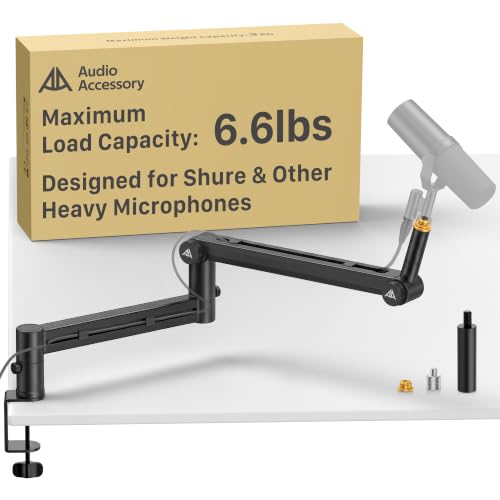
- 6.6-pound load capacity
- Gear-lock design helps prevent sagging
- Deep channels manage multiple cables
Best For: Heavy studio mics such as the Shure SM7B
Best Cable Routing
InnoGear Channel-Managed Mic Arm

- Removable covers conceal cables
- Up to 32.3 inches of horizontal reach
- Supports up to 3.5 pounds
Best For: Clean, extended desktop setups
Best Space-Saving Pick

- Slim fold-away design
- 29-inch maximum extension
- Supports microphones up to 3 pounds
Best For: Compact gaming and office desks
Low-Profile Flexibility

- 25.6-inch reach with broad 360° and 250° adjustment
- Supports microphone setups up to 3.3 pounds
- Includes multiple adapters and a universal mic clip
Best For: Creators needing a versatile low-profile arm
Hidden Cable Routing

- Hidden cable management keeps USB wiring concealed
- Metal construction supports up to 1.4 kilograms
- Three joints and 360° base rotation aid positioning
Best For: Blue Yeti and similar microphone setups needing tidy routing
Magnetic Cable Channel

- Snap-on magnetic channel hides and organizes cables
- Wide range of rotation, swivel, and tilt adjustments
- 3.3-pound capacity with two thread adapters
Best For: Compact desks where clean, concealed cable routing matters
Best All-Metal Stability

- Aluminum build supports microphones up to 800g
- Hidden cable organizer with four included cable ties
- 360° base and multi-axis adjustment
Best For: Stable streaming and recording desks
Best Low-Profile Design

- Internal cable routing keeps the setup neat
- 360° horizontal and 95° vertical adjustment
- Metal build with a stable table clamp
Best For: Compact, minimalist streaming desks
Best for Flexible Low-Profile Positioning

- Low-profile design with concealed cable routing
- 360° rotation and 180° vertical swing
- Supports microphones or mounts up to 2kg
Best For: Flexible gaming and podcasting setups
Best All-Around Pick – 360° Adjustable Mic Arm
This microphone boom arm with cable management is a versatile choice for home recording, streaming, gaming, and podcasting. Its 360° rotating base, broad thread compatibility, and included adapters make positioning and setup straightforward.
Best For: Users who want flexible positioning and wide microphone compatibility.
Pros:
- Supports microphones up to 4.4 pounds and helps reduce slight vibration.
- 360° horizontal rotation allows low, mid, or high placement.
- Built-in cable management helps keep cords arranged and reduces pulling.
- Includes 1/4-inch, 3/8-inch, and 5/8-inch adapters plus a phone clip.
Cons:
- The clamp fits desks from 0.8 to 2.4 inches thick, so unusually thick or thin desks may not be compatible.
- Its 4.4-pound capacity is lower than some heavy-duty alternatives.
With sturdy aluminum construction, a padded clamp, and useful accessories, this arm offers a practical balance of adjustability and compatibility for general-purpose setups.
Best for Heavy Microphones – Low-Profile Gear-Lock Mic Arm
For heavier studio microphones, this microphone boom arm with cable management uses reinforced arms and a gear-lock mechanism instead of a spring-loaded design. Its low-profile form and extra-long reach suit desks where stability and screen clearance matter.
Best For: Shure SM7B-class microphones and other setups needing up to 6.6 pounds of support.
Pros:
- Supports up to 6.6 pounds with 40 × 25 mm reinforced arms.
- Gear-lock construction is designed to resist sagging over time.
- Deep cable channels route multiple cables neatly.
- Offers 780 mm of reach with 360° horizontal and 120° vertical adjustment.
Cons:
- Its 1.63 kg weight makes it less portable than lighter arms.
- Thread compatibility is listed as 3/8 inch and 5/8 inch, without a 1/4-inch option.
This is the strongest option in the group for demanding microphones, combining a low-profile design with tool-free knobs and a locking adjustment system.
Best Cable Routing – InnoGear Channel-Managed Mic Arm
This microphone boom arm with cable management features removable rubber cable covers over built-in channels, giving streaming and recording desks a cleaner appearance. It also provides a long reach and an extension riser for positioning the microphone over monitors.
Best For: Blue Yeti, SM7B, and similar microphones on larger desks.
Pros:
- Channels and rubber covers help keep cables contained and untangled.
- Reaches up to 32.3 inches horizontally and 37.4 inches vertically with the riser.
- Supports up to 3.5 pounds with internal springs and thickened steel construction.
- Provides 360° base rotation with multiple angle adjustments.
Cons:
- The desk clamp fits surfaces up to 2 inches thick.
- Only a 5/8-inch microphone stand thread is listed.
- The shock mount is not included.
Its dedicated cable channels are the main attraction, while the long reach and extension riser make it useful when the microphone needs to clear a monitor or reach across a broad desktop.
Best Space-Saving Pick – TODI Lightweight Mic Arm
This microphone boom arm with cable management is designed for lightweight microphones and compact desks. Its slim, fold-away structure can extend behind a monitor, while the 360° base hinge and cable channel support flexible, tidy positioning.
Best For: Gaming, podcasting, and streaming setups using microphones weighing up to 3 pounds.
Pros:
- Space-saving low-profile design extends up to 29 inches.
- Fold-away construction is unobtrusive when stored.
- 360° base hinge supports flexible positioning.
- Includes 3/8-inch and 5/8-inch mounting threads and a cable channel.
Cons:
- It is intended for light microphones and is not suitable for heavy-duty studio mics.
- It does not fit some 1/4-inch microphones, including the Blue Yeti ORB and Yeti X listed in the notes.
- Its 29-inch reach is shorter than the longest arm in this roundup.
Choose this arm when desk space and monitor visibility are priorities. Its lightweight limit and stated compatibility exclusions make checking your microphone specifications especially important.
Low-Profile Flexibility – InnoGear MU-LP26 Boom Arm
If you want a microphone boom arm with cable management that stays unobtrusive, the InnoGear MU-LP26 uses a low-profile design that can tuck beneath a monitor. Its alloy-steel construction, broad adjustability, and included adapters make it a flexible choice for streaming, recording, and desk-based calls.
Best For: Streamers and creators who want a low-profile arm with broad microphone and accessory compatibility.
Pros:
- Extends up to 25.6 inches with 360° horizontal rotation and 250° vertical adjustment.
- Supports microphones and setups weighing up to 3.3 pounds.
- Includes 3/8-to-5/8-inch and 3/8-to-1/4-inch adapters, plus a universal mic clip.
- Rubber-padded C-clamp fits desks up to 2.75 inches thick and can double as a headphone hook.
Cons:
- The supplied notes do not describe an integrated cable channel or clips.
- The low-profile arm may require careful positioning with larger microphones or shock mounts.
The MU-LP26 is a strong all-around option when reach, load capacity, and compatibility matter most. If hidden cable routing is your top priority, verify how your existing cable will be secured before buying.
Hidden Cable Routing – Blue Yeti Heavy-Duty Boom Arm
This Blue Yeti-compatible microphone boom arm with cable management is designed to keep a USB cable tucked inside its all-tube metal structure. It combines a three-joint design, a padded metal clamp, and compatibility with several popular microphones for a tidy desktop recording setup.
Best For: Blue Yeti, HyperX QuadCast, and Shure SM7B users who want hidden cable routing in a compact arm.
Pros:
- Hidden cable management keeps the microphone’s USB cable neatly tucked away.
- All-tube metal construction supports up to 1.4 kilograms.
- Three pivoting joints, 360° base rotation, and a 15-inch arm provide positioning flexibility.
- Metal clamp fits desks up to 2.6 inches thick and includes protective padding.
Cons:
- The 15-inch arm is shorter than some extended boom-arm designs.
- Its stated warranty is 90 days.
- The package includes one 3/8-to-5/8-inch adapter, so compatibility may depend on the microphone thread.
With built-in cable concealment and a sturdy metal frame, this arm is a practical match for users prioritizing a cleaner Blue Yeti or similar microphone setup. Its shorter reach is worth considering if you need the mic positioned far across a large desk.
Magnetic Cable Channel – InnoGear LP98 Low-Profile Arm
The InnoGear LP98 is a microphone boom arm with cable management built into its low-profile design. Its snap-on magnetic cable channel keeps wires hidden and tangle-free, while the alloy-steel arm provides broad positioning options without taking up much vertical space.
Best For: Minimalist desks and compact streaming setups where concealed cable routing and a low arm profile are priorities.
Pros:
- Integrated magnetic cable channel makes it easy to route and conceal wires.
- Offers 360° base rotation, 180° swivel, 170° tilt, and 360° shaft rotation.
- Supports up to 3.3 pounds with a solid alloy-steel build.
- Includes 3/8-to-5/8-inch and 3/8-to-1/4-inch adapters for microphones, webcams, and other devices.
Cons:
- The clamp fits desks up to 2.36 inches thick and requires flat edges.
- A shock mount is not included for the listed Fifine K669B compatibility.
- The low-profile design may offer less vertical clearance than a conventional raised boom arm.
The LP98 is the most purpose-built choice here for cable organization, combining magnetic routing with a compact footprint and substantial adjustment range. Check your desk edge dimensions carefully, especially if your desktop is thicker than 2.36 inches or has a rounded profile.
Best All-Metal Stability – FULAIM X37
The FULAIM X37 is a strong choice if you want a microphone boom arm with cable management and a sturdy, professional desktop setup. Its aluminum construction supports microphones up to 800g, while the integrated cable organizer helps keep the desk tidy.
Best For: Streamers, podcasters, and creators using microphones such as the HyperX QuadCast, Blue Yeti, or Shure SM7B.
Pros:
- All-metal aluminum construction supports up to 800g.
- Hidden cable organizer and included cable ties reduce desk clutter.
- 360° base rotation, 180° arm movement, and 270° adapter adjustment.
- Includes 3/8-inch and 5/8-inch compatibility plus a space-saving clamp.
Cons:
- The 800g capacity may not suit heavier microphone combinations.
- The clamp offers two mounting modes, which may require choosing the right setup for your desk.
Choose the X37 when stability and flexible positioning matter more than a minimalist arm design. Its metal build and concealed cable routing make it a practical centerpiece for a clean recording station.
Best Low-Profile Design – Sensic SA-30 LP
The Sensic SA-30 LP is a microphone boom arm with cable management designed for clean, low-profile setups. Its cables route inside the stand, and the arm can mount beneath a monitor while providing broad horizontal and vertical adjustment.
Best For: Streamers and podcasters who want a discreet arm that keeps the microphone and cable path below the monitor area.
Pros:
- Internal cable management creates a minimal, organized appearance.
- 360° horizontal and 95° vertical rotation supports flexible placement.
- Metal construction and a sturdy table clamp provide a stable foundation.
- Compatible with microphones including the Blue Yeti, HyperX QuadCast, and RØDE PodMic.
Cons:
- Its 4.2-pound maximum recommendation may limit heavier microphone setups.
- The low-profile 95° vertical range is narrower than some multi-axis arms.
The SA-30 LP is a good fit when keeping the desktop visually uncluttered is a priority. Its internal cable routing and under-monitor-friendly profile make it especially suitable for compact workstations.
Best for Flexible Low-Profile Positioning – Aokeo AK-58i
The Aokeo AK-58i is a microphone boom arm with cable management for users who need a low-profile stand with broad adjustment. Both arms rotate 360°, the microphone arm swings 180° vertically, and the lower section hides and secures the cable.
Best For: Gaming, podcasting, recording, and streaming setups using microphones or shock mounts up to 2kg.
Pros:
- Low center of gravity is designed to reduce shaking and shifting.
- 360° arm rotation and 180° vertical swing offer flexible positioning.
- Bottom arm helps hide and secure the microphone cable.
- Includes 1/4-inch, 3/8-inch, and 5/8-inch adapters.
Cons:
- It fits tables less than 7cm thick, limiting desk compatibility.
- Its 2kg capacity is lower than some heavier-duty microphone arms.
- The microphone is not included.
The AK-58i makes sense for users who want low-profile positioning without giving up substantial adjustment range. Check your desk thickness and microphone weight before choosing it.
How We Picked the Best Microphone Boom Arm with Cable Management
We focused on the features that matter most in daily use: load capacity, clamp stability, arm movement, cable-routing design, microphone compatibility, and desk footprint. The selection includes traditional broadcasting arms, low-profile models, hidden-cable designs, and compact options for lighter microphones.
Because microphone weights and mounting systems vary, we also considered whether each arm is better suited to lightweight USB microphones, heavier broadcast microphones, or popular models such as the Blue Yeti, HyperX QuadCast, and Elgato Wave.
Quick Comparison
| Best For | Look For | Typical Advantage |
|---|---|---|
| Streaming and podcasting | Strong clamp and broad adjustment range | Stable positioning during long sessions |
| Small desks | Low-profile arm and compact clamp | More usable monitor and keyboard space |
| Heavy microphones | High weight rating and reinforced joints | Less sagging and unwanted movement |
| Clean cable setups | Hidden channels or integrated cable clips | Fewer loose wires around the desk |
| Portable or flexible setups | Foldable or storable arm design | Easy repositioning when the desk is needed |
Key Buying Factors for a Microphone Boom Arm with Cable Management
Weight Capacity and Balance
Check the arm’s rated capacity against the combined weight of your microphone, shock mount, pop filter, and any adapter. A model that barely meets the load limit may sag, while a stronger arm usually provides more dependable positioning.
Clamp and Desk Compatibility
Measure your desktop thickness and confirm that the clamp opens wide enough. A solid metal clamp with protective padding helps reduce vibration and prevents damage to the desk. For glass, unusually thin, or very thick surfaces, verify compatibility before ordering.
Reach, Rotation, and Profile
Choose an arm that can place the microphone close enough without blocking your monitor. Low-profile arms work well under or beside a display, while longer articulating arms are better when you need to swing the microphone across a larger desk. A 360-degree rotating design adds flexibility, but joint tightness is just as important as range.
Cable Management
Look for internal channels, covered guides, or secure clips that keep the USB or XLR cable from hanging into your work area. Make sure the routing path accommodates your cable’s thickness and leaves enough slack for full arm movement.
Who Should Buy Which Microphone Boom Arm with Cable Management?
Choose a heavy-duty arm if you use a substantial broadcast microphone, shock mount, or pop filter. A low-profile model is usually the better choice for streamers and remote workers with limited desk space. Lightweight microphone owners can save space and money with a compact arm designed for lower loads.
If appearance is a priority, select a model with hidden cable management and a clean desk clamp. For frequent repositioning, prioritize smooth rotation, folding joints, and easy tension adjustment. Finally, confirm the included thread adapter and mount style match your microphone before purchasing.