The best polyphonic synthesizers make it easier to build chords, pads, basses, sequences, and complete arrangements from a single instrument. This lineup spans analog, FM, digital modeling, and hybrid designs, with options for beginners, studio producers, performers, and experienced sound designers.
Voice count matters, but it is only one part of the decision. Keyboard feel, synthesis architecture, sequencing tools, modulation, preset storage, and price can have an even bigger impact on how well a synthesizer fits your workflow.
Best 10 Polyphonic Synthesizers Picks for 2026
Flagship Analog Powerhouse
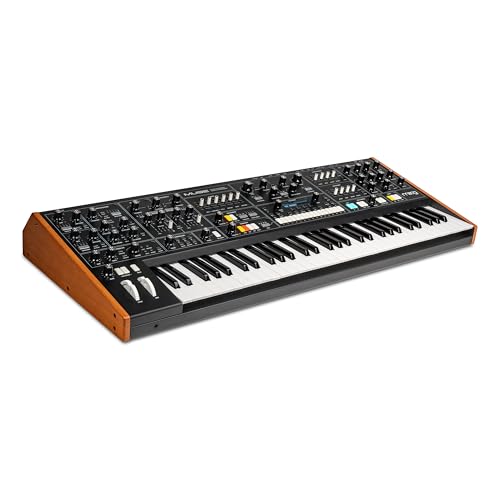
- Eight-voice analog architecture with dual VCOs per voice
- 64-step sequencer, chord memory, and 256 patch locations
- Stereo Diffusion Delay and hands-on performance controls
Best For: Studio producers and performers wanting a substantial analog centerpiece
FM Sound Design Specialist

- Six-operator FM plus five additional synthesis styles
- 64 voices with 500 combined preset and user locations
- Motion sequencing, effects, randomizer, and modulation matrix
Best For: Producers seeking broad digital synthesis and expressive sequencing
High-Polyphony Analog Workstation
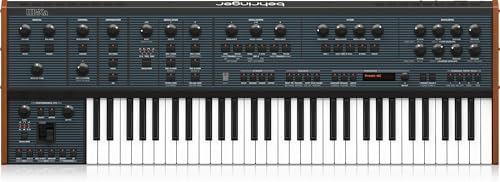
- 16-voice, bi-timbral analog architecture
- 32 oscillators for substantial analog sound generation
- DIN MIDI In, Out, and Thru with three footswitch jacks
Best For: Players needing high analog polyphony for a dedicated setup
Compact Experimental Hybrid
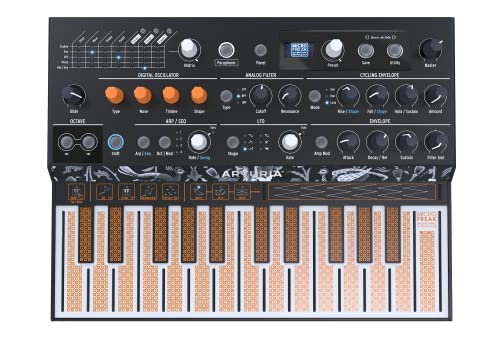
- Hybrid digital engines with a resonant analog filter
- 25-key keyboard with individual poly-aftertouch
- CV, USB, MIDI, sequencing, and modulation-matrix tools
Best For: Portable experimental rigs and modular-focused sound design
Deep Sound Design

- Four stacked oscillators for layered tones
- Extensive modulation and routing options
- Built-in KAOSS Pad and motion features
Best For: Experimental sound design and expressive performance
Portable Hybrid Choice

- Six-voice polyphonic hybrid design
- Playable 37-key portable format
- Includes VST counterpart and USB connectivity
Best For: Beginners and compact computer-based setups
Hands-On Analog Performance

- 37-key polyphonic analog synthesizer
- Two VCOs with aftertouch control
- Sequencer, arpeggiator, and modulation matrix
Best For: Expressive analog performance and sequencing
Best Analog Polyphonic Value

- Eight-voice analog polyphony
- Two VCOs per voice
- 400 program memories
Best For: Classic analog pads, leads, and sequenced sounds
Best Compact Four-Voice Choice

- Four-voice analog polyphony
- 37 slim keys
- Polyphonic step and motion sequencer
Best For: Accessible analog synthesis and compact performance setups
Best Fat-Sounding Performance Synth

- Four VCOs for thick analog tones
- 37 velocity-sensitive full-size keys
- Sequencer, arpeggiator, and effects
Best For: Bass-heavy performance sounds and hands-on sequencing
Flagship Analog Powerhouse – MOOG Muse 8-Voice
The MOOG Muse is a premium choice for musicians seeking expansive analog polyphonic synthesizers for both studio production and live performance. Its eight analog voices, 61-key layout, bi-timbral operation, and performance-focused controls make it a substantial centerpiece rather than a compact utility instrument.
Best For: Producers, performers, and sound designers who want rich analog voices, deep sequencing, and hands-on control.
Pros:
- Eight analog voices, each with dual VCOs, a modulation VCO, dual filters, and stereo VCA.
- Includes a 64-step sequencer, arpeggiator, chord memory, and 256 patch locations.
- Stereo Diffusion Delay adds multi-tap, filtering, and diffusion-based effects.
- Knob-per-function controls with additional module menus support detailed sound shaping.
Cons:
- At 32 pounds and nearly 39 inches wide, it requires substantial space.
- Its advanced feature set may be more than casual players need.
The Muse stands out when a full-size analog instrument is expected to handle composing, sound design, and performance in one setup. Its size and complexity favor dedicated workstations over portable rigs.
FM Sound Design Specialist – Korg opsix MKII
The Korg opsix MKII is a versatile digital option among polyphonic synthesizers, combining six-operator FM synthesis with several additional synthesis styles. Its 64 voices, 37 velocity-sensitive keys, modulation tools, and onboard effects suit players who want broad digital sound-design possibilities.
Best For: Electronic musicians and producers exploring FM, additive, waveshaping, and modeled sounds with deep modulation.
Pros:
- True six-operator FM synthesis provides detailed, complex tones.
- Offers 64 voices, 250 presets, and 250 user programs.
- Includes six synthesis styles, 30 effects, motion sequencing, and a step sequencer.
- Assignable aftertouch and a modulation matrix add expressive control.
Cons:
- Its emphasis on digital synthesis may not suit players seeking an all-analog signal path.
- The broad synthesis and modulation options can require a learning investment.
The opsix MKII is a strong fit for adventurous programming, especially when FM tones and evolving sequences are priorities. It offers considerable variety in a relatively compact 37-key format.
High-Polyphony Analog Workstation – Behringer UB-Xa 16-Voice
The Behringer UB-Xa delivers a large 16-voice analog platform for players who need substantial polyphony from their polyphonic synthesizers. Its bi-timbral design, 32 oscillators, and traditional MIDI connectivity make it suited to layered parts and hardware-based setups.
Best For: Keyboardists and studio users who prioritize high analog polyphony and bi-timbral operation.
Pros:
- Provides 16 voices of analog polyphony.
- Bi-timbral operation supports layered or split-style setups.
- Uses 32 oscillators for broad analog sound generation.
- Includes 5-pin DIN MIDI In, Out, and Thru connections plus three TRS footswitch jacks.
Cons:
- Its nearly 46-inch width makes it difficult to place in smaller spaces.
- The supplied notes provide limited detail about sequencing, effects, and patch storage.
The UB-Xa is most compelling when voice count and analog hardware are more important than portability. Its large chassis and straightforward connectivity favor a permanent studio or stage setup.
Compact Experimental Hybrid – Arturia MicroFreak
The Arturia MicroFreak is a lightweight, compact alternative to larger polyphonic synthesizers, pairing digital oscillator engines with a resonant analog filter. Its 25-key pressure-sensitive PCB keyboard, sequencing features, and CV, USB, and MIDI connectivity make it especially appealing for experimental and portable setups.
Best For: Experimental musicians, mobile producers, and modular users who want unusual sounds in a compact instrument.
Pros:
- Offers multiple digital modes spanning wavetable, physical modeling, vocoder, and more.
- 25-key keyboard provides individual poly-aftertouch expression.
- Spice, Dice, automation recording, and a modulation matrix encourage evolving patterns.
- CV pitch, gate, and pressure outputs support compatible modular equipment.
Cons:
- The 25-key format is less suitable for traditional full-range keyboard performance.
- Its paraphonic design is not the same as a fully independent-voice polyphonic architecture.
- The touch-plate keyboard may feel unfamiliar to players accustomed to moving keys.
MicroFreak is a strong choice when portability, unusual timbres, and hands-on experimentation matter more than conventional keyboard feel. At 2.3 pounds, it is easy to add to a hybrid, modular, or travel rig.
Deep Sound Design – Korg MULTIPOLY
Korg multipoly Analog Modeling Synthesizer w/Four Oscillators, 60 Voices and built-in KAOSS Pad
Check Price On AmazonThe Korg MULTIPOLY is a strong choice for musicians seeking polyphonic synthesizers with extensive sound-shaping options. Its four stacked oscillators, flexible routing, dual filters, modulation tools, and built-in KAOSS Pad make it suited to both vintage-inspired tones and evolving experimental textures.
Best For: Sound designers and synth players who want deep modulation, layered tones, and expressive performance controls.
Pros:
- Four oscillators create rich, multidimensional sounds.
- Includes x-mod, sync routing, dual filters, four envelopes, five LFOs, and six mod processors.
- KAOSS Pad features, Kaoss Physics, Layer Rotate, and Motion Sequencing 2.0 support dynamic performance.
Cons:
- Its broad feature set may require time to learn.
- The plastic body may feel less rugged than a metal instrument.
Choose the MULTIPOLY if you want a compact, highly flexible instrument that goes beyond conventional subtractive synthesis with interactive modulation and evolving textures.
Portable Hybrid Choice – Arturia MiniFreak
Arturia MiniFreak 37 Key Polyphonic 6-Voice Hybrid Synthesizer Keyboard (Standard, 37 Key)
Check Price On AmazonThe Arturia MiniFreak is a practical option among polyphonic synthesizers for players who want a portable 37-key instrument with a hybrid digital-and-analog sound profile. Its six-voice polyphony and included VST counterpart make it suitable for hands-on playing and computer-based setups.
Best For: Beginners and mobile musicians looking for a compact hybrid synthesizer with keyboard control.
Pros:
- Six-voice polyphony supports chords and layered playing.
- 37-key format balances portability with a playable keyboard.
- Includes a MiniFreak VST counterpart and USB connectivity.
Cons:
- The compact 37-key layout provides less range than a full-size keyboard.
- The supplied notes offer limited detail about the onboard synthesis controls.
The MiniFreak makes the most sense when portability, hybrid sound, and software integration matter more than a larger keyboard or a highly specified analog architecture.
Hands-On Analog Performance – Sequential Fourm
The Sequential Fourm is a focused choice for shoppers comparing polyphonic synthesizers built around analog voice architecture. It combines a 37-key keyboard with two VCOs, polyphonic aftertouch, a modulation matrix, and sequencing tools for expressive playing and performance-oriented programming.
Best For: Players who prioritize analog synthesis, expressive keyboard control, and integrated sequencing.
Pros:
- Polyphonic analog design with two VCOs delivers a traditional synthesis foundation.
- Polyphonic aftertouch enables expressive control from the keyboard.
- Includes a sequencer/arpeggiator, modulation matrix, and two ADSR envelopes.
Cons:
- The 37-key format may not suit players who need a full-size keyboard.
- The supplied specifications provide limited detail about connectivity beyond the listed HDMI connector.
The Fourm is a compelling fit for keyboardists who want tactile analog synthesis and expressive performance features in a relatively compact instrument, provided its listed connectivity meets your setup requirements.
Best Analog Polyphonic Value – Behringer PRO-800
The Behringer PRO-800 is a strong option for musicians seeking classic polyphonic synthesizers with an eight-voice analog architecture. Its two VCOs per voice, multiple oscillator shapes, and extensive program memory support thick pads, layered sounds, and hands-on sound design.
Best For: Players who want eight-voice analog polyphony, classic Prophet 600-inspired circuitry, and substantial preset storage.
Pros:
- Eight-voice polyphonic design with a pure analog signal path.
- Two VCOs per voice support fat and detuned tones.
- Includes an arpeggiator, sequencer, and 400 program memories.
- Unison mode can combine 16 oscillators for large lead and bass sounds.
Cons:
- The supplied information does not list a built-in keyboard.
- Its Eurorack-format design may require a suitable setup or enclosure.
- The listed dimensions may be substantial for compact workspaces.
Choose the PRO-800 when voice count and classic analog character matter more than an integrated keyboard. It offers a particularly capable feature set for studio sequencing and layered analog textures.
Best Compact Four-Voice Choice – Korg Minilogue
The Korg Minilogue is a practical entry point into polyphonic synthesizers, combining four-voice analog sound with a compact 37-key format. Its 200 presets, polyphonic step and motion sequencer, and built-in delay make it suitable for both sound exploration and performance.
Best For: Beginners and experienced players who want accessible analog polyphony, onboard sequencing, and a compact keyboard.
Pros:
- Four-voice analog polyphony delivers warm, punchy tones.
- Includes 200 preset sounds plus editable sound-design controls.
- Built-in polyphonic step and motion sequencer supports live and studio use.
- 37 slim keys and an oscilloscope display add practical playability and visual feedback.
Cons:
- Four voices provide less polyphony than larger eight-voice instruments.
- The supplied notes identify an audio jack but do not specify broader connectivity.
- The compact slim-key design may not suit players who prefer full-size keys.
The Minilogue is a balanced choice when you want genuine analog sound without moving to a larger instrument. Its sequencer, presets, and visual display make it especially approachable for learning and quick composition.
Best Fat-Sounding Performance Synth – Behringer POLY D
The Behringer POLY D suits players who want thick, bass-forward tones from polyphonic synthesizers with a performance-oriented control set. Its four VCOs, four-voice polyphonic or paraphonic operation, full-size keys, sequencer, arpeggiator, chorus, and distortion cover both classic leads and layered textures.
Best For: Keyboard players seeking powerful analog basses, full-size keys, and flexible mono, unison, paraphonic, and polyphonic modes.
Pros:
- Four VCOs produce notably fat analog sounds.
- Supports mono, unison, polyphonic, and paraphonic operation.
- Includes 37 velocity-sensitive, semi-weighted full-size keys.
- Provides a 32-step sequencer, arpeggiator, BBD stereo chorus, and distortion.
Cons:
- Four-voice operation offers less polyphony than eight-voice instruments.
- At 26.1 pounds, it is relatively heavy for a compact synthesizer.
- The supplied notes describe mixed connectors without detailing the full connection set.
The POLY D is a compelling fit for hands-on performers who prioritize weighty, warm tones and full-size keyboard control. Its effects and sequencing features also make it well equipped for immediate live experimentation.
How We Picked These Polyphonic Synthesizers
We selected instruments that offer meaningful polyphonic capability while covering a wide range of synthesis styles, budgets, and use cases. The roundup includes true analog designs, digital FM instruments, analog-modeling keyboards, and hybrid synthesizers. We also considered practical features such as voice count, multitimbrality, onboard sequencing, arpeggiation, effects, preset capacity, connectivity, and keyboard size.
Rather than treating the highest voice count as automatically best, we focused on how each instrument balances sound, hands-on control, portability, performance features, and long-term usefulness.
Quick Comparison
| Best For | What to Look For |
|---|---|
| Classic analog chords | Dedicated oscillators, a responsive filter, and solid voice allocation |
| Complex digital sounds | FM operators, modulation options, effects, and polyphony |
| Hands-on experimentation | Accessible controls, sequencers, motion recording, and performance effects |
| Studio arrangements | Higher voice counts, multitimbrality, MIDI, and deep patch storage |
| Budget-conscious buyers | Useful polyphony, full-size controls, and reliable sequencing without unnecessary extras |
Key Buying Factors for Polyphonic Synthesizers
Voice Count and Voice Allocation
More voices let you play larger chords, sustain notes, and layer parts with fewer cutoffs. Eight voices is a practical target for many players, while 16 or more is valuable for dense arrangements, splits, and sustained pads. Voice count is less important when you mainly play basses, leads, or short sequences.
Synthesis Architecture
Analog synthesizers are valued for immediate controls and rich oscillator-filter interaction. FM instruments excel at metallic, bell-like, percussive, and sharply defined tones. Modeling and hybrid designs can provide broader sonic coverage, multiple engines, and deeper modulation in a smaller or more affordable package.
Keyboard, Controls, and Workflow
Consider whether you want full-size keys, a compact keybed, or a desktop-style instrument. A hands-on panel speeds up sound design, while menus can provide more depth at the cost of immediacy. Aftertouch, velocity response, octave controls, and a comfortable layout can significantly improve performance.
Sequencing, Effects, and Connectivity
An onboard sequencer or arpeggiator can turn a compact keyboard into a complete writing tool. Built-in effects add polish and reduce the need for external equipment. Check for MIDI, USB, CV or gate connections, audio outputs, and synchronization support if you plan to integrate hardware instruments or modular gear.
Who Should Buy Which Polyphonic Synthesizers?
Choose a classic analog model if you want tactile controls, warm chord sounds, and a straightforward studio workflow. A higher-voice instrument is the better choice for sustained pads, complex arrangements, and live performance where note stealing would be distracting.
Choose an FM or hybrid synthesizer if versatility matters more than a strictly vintage sound. These instruments are especially useful for producers who need evolving textures, digital keys, modern basses, and extensive modulation. Compact, affordable models are ideal for beginners, mobile setups, and musicians adding their first polyphonic instrument, while larger keyboards and deeper sequencers suit performers and experienced sound designers.
Before buying, prioritize the way you actually write and perform. The best Polyphonic Synthesizers are not necessarily the most expensive or the ones with the highest voice count; they are the instruments whose controls, sound architecture, and connectivity match your music-making habits.