The best stage monitors for bands help every performer hear the vocals, instruments, and cues needed for a confident live performance. The right wedge can improve pitch, timing, communication, and overall stage control.
This roundup compares 10 powered and passive monitor speakers across practical formats, including compact 10-inch wedges, versatile 12-inch models, and high-output 15-inch options. Use the guide below to match monitor type, power, coverage, and portability to your band’s setup.
Best 10 Stage Monitors for Bands Picks for 2026
Premium Coaxial Control

- 700W Class-D powered coaxial monitor
- 90° x 90° coverage with 55° angle
- Three inputs and advanced DSP controls
Best For: Bands and audio professionals needing powerful, adjustable monitoring
High-Power Value Wedge

- 300W powered 2-way monitor
- 12-inch woofer with 1-inch compression driver
- Feedback filter and integrated limiter
Best For: Budget-conscious bands and playback applications
Compact Passive Wedge

- 10-inch floor monitor with titanium horn
- 150W RMS and 300W peak ratings
- ¼-inch and Speakon connectivity
Best For: Smaller bands with an existing compatible amplifier
Controlled Powered Monitor

- 250W bi-amped 12-inch monitor
- Adjustable feedback filter and limiter
- XLR, ¼-inch, RCA, and Speakon connections
Best For: Bands needing a versatile powered monitor with wired inputs
Compact Active Pick

- 800W powered 2-way monitor
- 10-inch coaxial driver design
- Combo input and XLR Link output
Best For: Bands needing a compact powered monitor with flexible connections
High-Sensitivity Passive Pick
Yamaha BR12M 12-inch Floor Monitor

- 12-inch woofer with 97dB sensitivity
- 300W program and 600W peak handling
- Built-in pole socket and steel handles
Best For: Bands using an existing amplifier or powered mixer
Two-Monitor Value Pick
Sound Town METIS-10MPW Powered Pair

- Two powered 10-inch monitors
- 300W amplification per speaker
- Three-band EQ and XLR daisy chaining
Best For: Bands needing two powered monitors for live sound or rehearsal
Road-Ready Classic
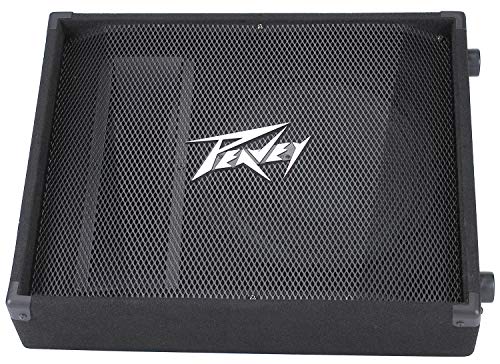
- 500W program and 1,000W peak handling
- 12-inch woofer with titanium compression driver
- 30°/45° angles plus pole mounting
Best For: Bands wanting a rugged passive vocal monitor
Powered Stage Workhorse

- 350W RMS and 1,400W peak output
- Combo XLR/TRS input and built-in controls
- 15-inch woofer in a tilt-back wedge
Best For: Performers needing an all-in-one active monitor
Passive Wide-Coverage Wedge

- 1,400W peak handling with a 15-inch woofer
- 70° x 50° horn coverage
- 1/4-inch and Speakon input/output connectors
Best For: Passive PA systems needing broad stage coverage
Premium Coaxial Control – Electro-Voice PXM 12MP
For bands seeking stage monitors with powerful, consistent coverage, the Electro-Voice PXM 12MP combines a 12-inch/1.75-inch coaxial driver with a 700W Class-D amplifier. Its 90° x 90° pattern, 55° monitor angle, onboard mixing, and flexible DSP make it suitable for detailed live monitoring and compact PA setups.
Best For: Bands, DJs, and audio engineers who want powerful monitoring with extensive EQ and input flexibility.
Pros:
- 700W Class-D amplification with system protection and limiting
- 90° x 90° coverage and a 55° monitoring angle support clear listening positions
- Three input channels, including combo XLR/¼-inch inputs and stereo RCA
- DSP includes EQ presets, parametric EQ, low-cut filters, and a feedback notch filter
Cons:
- Heavier and larger than the smaller 10-inch wedge option in this roundup
- Requires corded power and is not waterproof
The PXM 12MP is the most feature-rich choice here for performers who need more than basic amplification. Its DSP and mixing section can simplify a stage setup, while the coaxial design provides broad, consistent coverage.
High-Power Value Wedge – Behringer EUROLIVE F1320D
The Behringer EUROLIVE F1320D is a practical option for bands comparing stage monitors for bands on a budget. It delivers 300W through a 12-inch woofer and 1-inch compression driver, with an integrated sound processor, adjustable feedback filter, and limiter for live or playback applications.
Best For: Live bands and playback setups that need an affordable, powered 12-inch monitor with feedback control.
Pros:
- 300W Class-D amplification in a relatively lightweight design
- 12-inch woofer and 1-inch compression driver provide 2-way operation
- Adjustable feedback filter and integrated limiter aid system control
- Designed for both live and playback applications
Cons:
- Less amplifier power than the 700W Electro-Voice monitor
- Not water resistant
- Listed frequency-response information is limited in the supplied specifications
The F1320D balances useful live-performance features with straightforward powered operation. Its feedback filter and limiter are particularly helpful when consistent stage performance matters, though larger or louder setups may require more output.
Compact Passive Wedge – Seismic Audio SA-10MTSingle
Seismic Audio - SA-10MTSingle - 10" Floor / Stage Monitor Wedge Style with Titanium Horn
Check Price On AmazonThe Seismic Audio SA-10MTSingle is a compact passive wedge for bands that already have suitable amplification. Its 10-inch speaker, titanium compression horn, and 150W RMS/300W peak ratings provide a simple stage-monitoring solution with wired ¼-inch and Speakon connectivity.
Best For: Smaller bands and venues needing an uncomplicated, space-conscious passive floor monitor.
Pros:
- Compact 10-inch wedge-style cabinet
- Titanium compression horn driver for 2-way operation
- 150W RMS and 300W peak power ratings
- 22-pound weight is lighter than the powered 12-inch options listed here
Cons:
- Passive design requires a separate amplifier
- Lower power capacity than the Electro-Voice and Behringer powered monitors
- Not water resistant
The SA-10MTSingle makes sense when portability and straightforward deployment are priorities. It is a basic speaker-only wedge, so confirm that your amplifier can support its 8-ohm impedance and power requirements before buying.
Controlled Powered Monitor – Behringer EUROLIVE F1220D
The Behringer EUROLIVE F1220D gives bands a powered 12-inch stage monitor with 250W output, bi-amped operation, and a built-in feedback filter. Its 12-inch woofer and 3-inch tweeter are suited to live performances and music playback, while the limiter adds protection during demanding use.
Best For: Bands wanting a powered 12-inch monitor with feedback management and multiple wired connection options.
Pros:
- 250W bi-amped monitor system with a 12-inch woofer
- Adjustable feedback filter and integrated limiter
- Supports XLR, ¼-inch TRS/TS, RCA, and Speakon connectivity
- Class-D amplifier technology keeps the powered cabinet comparatively lightweight
Cons:
- Lower rated output than the F1320D and Electro-Voice PXM 12MP
- Not water resistant
- Supplied details list tabletop mounting rather than a dedicated wedge angle
The F1220D is a flexible powered choice for performers who value connection versatility and feedback control. It offers a useful middle ground between a basic passive wedge and a higher-powered monitor with more advanced DSP.
Compact Active Pick – Samson RSXM10A
For bands seeking stage monitors for bands with built-in amplification, the Samson RSXM10A offers a compact powered setup with 800 watts of output. Its coaxial design, combo input, and selectable FOH/Monitor mode make it practical for live performance, rehearsal, DJ booths, and sound-engineering applications.
Best For: Bands that want a single powered 10-inch monitor with flexible input and output options.
Pros:
- Integrated Class D amplification provides up to 800 watts of output.
- 10-inch woofer and 1-inch tweeter use a compact coaxial design.
- XLR-1/4-inch combo input and XLR Link output support flexible connections and daisy chaining.
- All-wood cabinet includes a 1 3/8-inch pole-mount receptacle.
Cons:
- At 30 pounds, it is not the lightest monitor in this group.
- It is not waterproof, so it requires protection from moisture.
The RSXM10A is a sensible choice when you want powered monitoring without adding a separate amplifier. Its 10-inch format balances portability and stage output, while the FOH/Monitor selector helps adapt it to different sound setups.
High-Sensitivity Passive Pick – Yamaha BR12M 12-inch Floor Monitor
The Yamaha BR12M is a passive 12-inch floor monitor for bands that already use an amplifier or powered mixer. With 300 watts of program handling, 600 watts peak handling, 97dB sensitivity, and a 90-by-40-degree horn, it is designed for sound reinforcement and stage monitoring.
Best For: Bands and venues that need a larger passive monitor cabinet for use with existing amplification.
Pros:
- 12-inch woofer delivers a larger low-frequency format than the 10-inch options here.
- Handles 300 watts program and 600 watts peak power.
- 97dB sensitivity supports efficient output with a suitable amplifier.
- Built-in pole socket, steel handles, and corner protectors aid installation and handling.
Cons:
- It requires a separate amplifier or powered mixer.
- The cabinet weighs 15.6 kg, making it less convenient to carry than smaller monitors.
- It uses wired speaker connections and has no wireless communication.
The BR12M makes the most sense for a band building a traditional passive monitoring system. Its 12-inch woofer, high sensitivity, and robust cabinet features favor applications where an existing amplifier rack and higher-output floor monitor are priorities.
Two-Monitor Value Pick – Sound Town METIS-10MPW Powered Pair
The Sound Town METIS-10MPW-PAIR supplies two powered 10-inch monitors, making it a practical option for bands that need coverage for multiple performers. Each speaker has a 300-watt amplifier, a compression driver, XLR input and output, auxiliary connectivity, and a three-band EQ.
Best For: Bands, churches, bars, and rehearsal spaces that need two powered floor monitors in one package.
Pros:
- The package includes two powered stage monitors.
- Each speaker combines a 10-inch woofer with a 1-inch compression driver and 300-watt amplifier.
- XLR line input and output support daisy chaining, while 1/4-inch and 1/8-inch inputs add source flexibility.
- Onboard bass, mid, and treble controls allow basic tonal adjustment.
Cons:
- The monitors are not water resistant.
- The one-year warranty is shorter than some extended coverage options.
- Each speaker is limited to an 8-ohm wired configuration.
This pair is especially useful when a band needs two independent floor positions without purchasing separate powered speakers. The low-profile wedge cabinets, recessed handles, metal grilles, and reinforced corners also support regular transport and live-use setup.
Road-Ready Classic – Peavey PV 12M
The Peavey PV 12M is a rugged passive wedge for bands that need dependable stage monitors for bands, with substantial power handling and clear vocal projection. Its 12-inch woofer, titanium-diaphragm compression driver, and adjustable 30- or 45-degree floor angles suit live performance setups.
Best For: Bands seeking a durable passive monitor for vocals, instruments, and touring use.
Pros:
- Handles 500 watts program and 1,000 watts peak power.
- 12-inch Sheffield Pro woofer and 14XT titanium-diaphragm compression driver support vocal clarity.
- Heavy-duty grille, carpet covering, steel handle, and die-cast pole mount suit demanding setups.
- Can be angled at 30 or 45 degrees or pole mounted.
Cons:
- Passive design requires a separate amplifier.
- At 41 pounds, it may be less convenient to transport than lighter monitors.
- It is not waterproof.
The PV 12M is a practical choice when durability and flexible positioning matter more than built-in amplification. Its substantial construction and five-year warranty add appeal for regular live use.
Powered Stage Workhorse – Rockville RSM15A
The Rockville RSM15A is an active 15-inch wedge that simplifies stage monitoring for bands by combining amplification, connectivity, and sound-shaping controls in one cabinet. Its high output, combo inputs, three-band EQ, and feedback filter make it adaptable for live events.
Best For: Bands, DJs, and performers who want a powered monitor with flexible input and control options.
Pros:
- Rated at 350 watts RMS and 1,400 watts peak with a 15-inch woofer.
- Combo XLR/1/4-inch TRS input supports mixers, microphones, and instruments.
- Includes three-band EQ and an adjustable 300Hz-5kHz feedback filter.
- Wedge design, handles, steel grille, and carpeted MDF cabinet support stage use.
Cons:
- At 61.2 pounds, it is relatively heavy for transport.
- It is not waterproof.
- The supplied details list no warranty.
Choose the RSM15A when you want a larger powered monitor without adding a separate amplifier. Its controls are useful for tailoring sound onstage, while the 15-inch format favors strong low-frequency output.
Passive Wide-Coverage Wedge – Rockville RSM15P
The Rockville RSM15P is a passive 15-inch wedge for bands that already have amplification and need broad stage coverage. Its angled enclosure, 70-by-50-degree horn dispersion, and dual 1/4-inch and Speakon connections make it suitable for flexible PA and monitoring systems.
Best For: Bands and DJs building a passive stage-monitor system around an external amplifier.
Pros:
- Provides 1,400 watts peak handling with a 15-inch woofer and 1.75-inch titanium compression driver.
- 70-by-50-degree coverage helps distribute sound across the stage.
- Dual 1/4-inch and Speakon inputs and outputs support system integration.
- Carpeted MDF cabinet, steel grille, handles, and wedge positioning support portable use.
Cons:
- Requires a separate amplifier.
- Its 54.9-pound weight adds transport bulk.
- It is not waterproof, and the supplied details list no warranty.
The RSM15P makes sense for users who prefer passive system control and already own compatible amplification. Its wide horn coverage and connection options give it useful flexibility for stage and PA duties.
How We Picked These Stage Monitors for Bands
We focused on the specifications and design features that matter most in live use: speaker size, powered versus passive operation, rated output, driver configuration, feedback-control features, cabinet format, and setup flexibility. The selection includes options for small bands, rehearsal spaces, churches, DJs, club stages, and larger live rigs.
Because published wattage is not directly comparable across every brand, treat power ratings as a starting point rather than a guarantee of volume. Real-world performance also depends on sensitivity, amplifier quality, room size, placement, and the rest of the PA system.
Quick Comparison
| Monitor type | Best suited to | Main advantage |
|---|---|---|
| 10-inch powered wedge | Small stages and vocal monitoring | Compact setup with built-in amplification |
| 12-inch powered wedge | Full bands and general-purpose PA use | Balanced vocal and instrument coverage |
| 15-inch powered wedge | Bass-heavy music and larger stages | Greater low-frequency output |
| Passive wedge | Existing amplifier or powered mixer systems | Flexible system integration and potentially lower cost |
| Monitor pair | Multiple performers or stereo-related setups | Two matching speakers in one purchase |
Key Buying Factors for Stage Monitors for Bands
Powered or Passive Design
Powered monitors include an amplifier, so each cabinet can connect directly to a mixer or suitable line-level output. They are usually easier to deploy and reduce the need for separate amplifier matching. Passive monitors make sense when you already own a compatible power amplifier, powered mixer, or distributed PA system.
Speaker Size and Coverage
Ten-inch monitors are easier to carry and can work well for vocals, keyboards, and compact stages. Twelve-inch wedges are a versatile middle ground for most bands. Fifteen-inch models can provide more low-end authority, but they are heavier and may make feedback management and placement more demanding.
Feedback Control and Placement
Look for feedback filters, sensible equalization controls, and a monitor shape that aims sound toward the performers. Place the wedge along the microphone’s rejection angle, keep it as close as practical, and avoid pointing microphones directly at the cabinet. Good placement often matters as much as raw power.
Connections, Durability, and Transport
Check the input and output connectors, cabinet handles, grille protection, weight, and enclosure construction before buying. A monitor that is easy to move and connect is more useful for regular rehearsals and gigs than one with impressive specifications but awkward handling.
Who Should Buy Which Stage Monitors for Bands?
- Small bands and acoustic groups: Choose a compact 10-inch powered wedge for straightforward vocal and instrument monitoring.
- Most club and church bands: A 12-inch powered monitor offers the best balance of coverage, portability, and versatility.
- Bass-heavy bands and larger stages: Consider a 15-inch powered model when you need stronger low-frequency output and have adequate transport space.
- Buyers with an existing PA amplifier: A passive 12-inch or 15-inch wedge may integrate cleanly while avoiding duplicate amplification.
- Groups needing several monitor mixes: Buy matching cabinets where possible, then confirm that your mixer has enough auxiliary sends and outputs.
Before ordering, verify the monitor’s impedance, power requirements, connector type, dimensions, and return policy. The best choice is the one that matches your mixer and stage size without adding unnecessary weight or unused output.