The best loop stations for live performances help musicians build layered arrangements, add rhythm, and keep a set engaging without relying on a full backing band. The right model depends on your instrument, workflow, stage setup, and need for hands-free control.
Our lineup includes straightforward pedals for beginners, vocal-focused performance units, and advanced loopers with multiple tracks, effects, rhythm patterns, and deep editing options.
Best 10 Loop Stations for Live Performances Picks for 2026
Flagship Floor Control
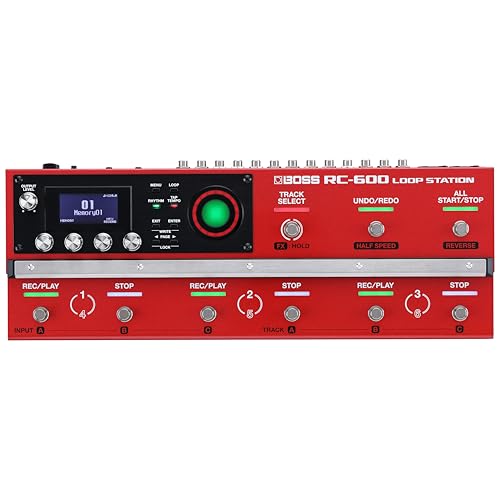
- Six simultaneous stereo phrase tracks
- 49 Input FX and 53 Track FX types
- Nine assignable footswitches
Best For: Advanced live looping with extensive foot control
Touchscreen Song Builder
Aeros Loop Studio Gold Edition
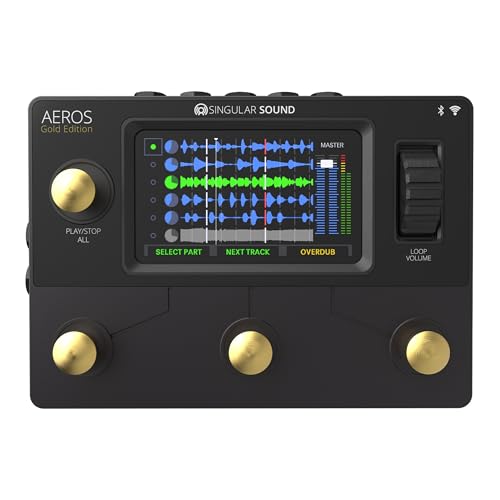
- Six song parts and six stereo tracks
- Up to 10 hours per song
- Touchscreen mixer with USB, Wi-Fi, and Bluetooth
Best For: Song-based live looping and extended loop storage
Tabletop Layering Hub

- Five stereo phrase tracks with faders
- Dual effects sections with 49 and 53 effect types
- Two XLR mic inputs with phantom power
Best For: Hands-on tabletop mixing and vocal-led performances
Vocal and Guitar Performance Center
TC Helicon VoiceLive 3 Extreme

- Vocal harmony and effects processing
- Guitar effects and amp tones
- Backing tracks with effects automation
Best For: Singer-guitarists building integrated solo performances
Tabletop Performance Hub
- Five stereo looping tracks
- Two XLR inputs with phantom power
- Includes footswitches and expression pedal
Best For: Tabletop vocalists, beatboxers, and multi-layer performers
Six-Track Looping Laboratory

- Six tracks with stereo I/O
- Over six hours of looping
- Quantized or free-running recording
Best For: Performers building extended, multi-layer arrangements
Compact Dual-Track Powerhouse

- Two tracks with 13 hours of stereo recording
- Onboard rhythms and color LCD
- XLR, 1/4-inch, and USB connectivity
Best For: Portable live performers needing straightforward dual-track looping
Best Simple Looper

- Straightforward record, overdub, and playback controls
- 12 minutes of stereo recording time
- Clear 24-segment loop-mode indicator
Best For: Beginners and players wanting uncomplicated live looping
Best Advanced Dual-Track

- Dual-track looping with onboard mixing and Loop FX
- 13 hours of stereo recording and 99 phrase memories
- Rhythms, USB file management, and MIDI connectivity
Best For: Performers building detailed, repeatable live arrangements
Best Rhythm-Focused
BOSS RC-10R Rhythm Loop Station

- 280-plus rhythm styles with fills and song sections
- Two-track operation for independent song parts
- Six hours of stereo recording and 99 phrase memories
Best For: Solo acts wanting structured rhythms with live loops
Flagship Floor Control – BOSS RC-600
For musicians seeking loop stations for live performances, the BOSS RC-600 offers extensive hands-on control, six simultaneous stereo tracks, and substantial effects flexibility. Its floor-based design suits guitarists, vocalists, singer/songwriters, and multi-instrumentalists building complex layered sets.
Best For: Advanced performers who need deep foot control, multiple stereo loops, and extensive onboard effects.
Pros:
- Records and edits up to six simultaneous stereo phrase tracks.
- Provides 49 Input FX and 53 Track FX types, with up to four effects at once in each section.
- Offers nine freely assignable footswitches and three pedal modes.
- Uses 32-bit AD/DA conversion and 32-bit floating-point processing.
Cons:
- Its 8.2-pound floor-based body is relatively substantial for a pedal.
- The extensive controls and customizable functions may be more than beginners need.
The RC-600 is a feature-rich choice when performance control and layered arrangement capacity matter more than compactness. It is especially compelling for players who want to manage sophisticated live loops directly from the floor.
Touchscreen Song Builder – Aeros Loop Studio Gold Edition
The Aeros Loop Studio Gold Edition is a practical option among loop stations for live performances when touchscreen mixing, song-based organization, and generous recording capacity are priorities. It supports six song parts, six stereo tracks per song, and unlimited overdubs.
Best For: Guitarists, vocalists, and multi-instrumentalists who want touchscreen control and long-form loop storage.
Pros:
- Supports up to six song parts and six stereo tracks per song with unlimited overdubs.
- Records up to 10 hours per song and stores more than 48 hours with a 32GB SD card.
- Includes a touchscreen mixer plus USB, Wi-Fi, Bluetooth, and MIDI connectivity.
- Provides 32-bit floating-point audio and built-in Reverse, Fade In/Out, and Loop Decay effects.
Cons:
- The 32GB SD card needed for expanded storage is not included.
- Its touchscreen-oriented workflow may be less immediate than an all-footswitch design.
With substantial storage and flexible connectivity, the Aeros is well suited to performers who organize loops into complete song sections. Its compact 2.3-pound build also makes it easier to accommodate in a portable live setup.
Tabletop Layering Hub – BOSS RC-505mkII
The BOSS RC-505mkII is a tabletop-focused choice for loop stations for live performances, combining five stereo phrase tracks with dedicated faders, customizable buttons, and broad input and output routing. It is designed for performers who prefer hands-on tabletop mixing over foot-based control.
Best For: Vocalists, beatboxers, and tabletop performers who need visible track mixing and flexible connectivity.
Pros:
- Provides five simultaneous stereo phrase tracks with independent volume faders.
- Includes 49 Input FX and 53 Track FX types, with four simultaneous effects in each section.
- Offers two XLR microphone inputs with phantom power and multiple stereo line connections.
- Stores up to 99 memories with phrase tracks, effects, playback settings, and control assignments.
Cons:
- Its tabletop format is less suitable for performers who want floor-based foot control.
- The unit is relatively large at 23.4 inches long.
The RC-505mkII is a strong fit for live artists who actively mix and shape several loops during a performance. Dedicated faders, customizable controls, and extensive routing make it particularly useful for detailed tabletop arrangements.
Vocal and Guitar Performance Center – TC Helicon VoiceLive 3 Extreme
The TC Helicon VoiceLive 3 Extreme combines looping with vocal harmony, guitar effects, backing-track playback, automation, and recording. For loop stations for live performances, it is most useful to performers who want an integrated vocal-and-guitar setup rather than a dedicated standalone looper.
Best For: Singer-guitarists who need vocal processing, guitar effects, backing tracks, and loop-based performance tools.
Pros:
- Supports backing-track import with synchronized effects automation.
- Provides vocal harmony processing, vocal effects, and tonal shaping.
- Includes guitar stompbox effects, amp tones, and flexible amp or PA output configurations.
- Offers performance recording with live streaming audio output to a USB flash drive.
Cons:
- Its feature set is centered on vocal and guitar performance rather than dedicated multitrack looping alone.
- The listed 12-volt corded power requirement may need planning for a compact pedalboard.
The VoiceLive 3 Extreme makes sense when looping is only one part of a broader solo performance rig. Its combination of harmony, guitar processing, backing tracks, automation, and recording can reduce the need for separate performance devices.
Tabletop Performance Hub – BOSS RC-505 Mk2
The BOSS RC-505 Mk2 is a versatile choice among loop stations for live performances, especially for singers, beatboxers, and electronic performers who prefer hands-on tabletop control. It provides five stereo tracks, two XLR microphone inputs with phantom power, stereo line inputs, and a built-in rhythm generator.
Best For: Tabletop performers who need multiple stereo tracks and direct microphone connectivity.
Pros:
- Five stereo tracks support layered live arrangements.
- Two XLR microphone inputs include phantom power.
- Includes rhythm generation, USB connectivity, and physical button-and-knob controls.
- Comes with a footswitch, dual footswitch, expression pedal, and AC adaptor.
Cons:
- Its tabletop format may be less convenient for performers who want a traditional floor pedal.
- The supplied notes list unusually large dimensions, so verify the physical footprint before purchasing.
With five stereo tracks and dedicated vocal-friendly inputs, the RC-505 Mk2 is built for complex, hands-on live looping setups. Its included control accessories also make it adaptable for more active performance workflows.
Six-Track Looping Laboratory – Electro-Harmonix 95000
The Electro-Harmonix 95000 Performance Loop Laboratory is a strong option among loop stations for live performances when extended recording capacity and detailed loop control matter. It offers six tracks, stereo I/O, more than six hours of looping, adjustable speed, and quantized or free-running recording modes.
Best For: Performers who want long recording times, six-track arrangements, and flexible timing control.
Pros:
- Six tracks provide substantial layering capacity.
- Offers over six hours of looping according to the supplied product highlight.
- Supports quantize or non-quantize recording modes.
- Includes tap-tempo control, two-octave speed adjustment, and bar/beat loop-progress display.
Cons:
- The supplied notes describe a corded-electric power source rather than battery operation.
- Its feature-rich workflow may be more than needed for simple one- or two-layer looping.
The 95000 stands out for capacity and timing flexibility. Its six-track layout and extended loop time suit structured live arrangements, while speed adjustment and quantization give performers more control over how layers fit together.
Compact Dual-Track Powerhouse – BOSS RC-500 Loop Station
The BOSS RC-500 is a compact choice among loop stations for live performances, combining two-track looping with 32-bit audio quality, up to 13 hours of stereo recording, onboard rhythms, and USB import/export. Its XLR and 1/4-inch inputs make it suitable for varied stage setups.
Best For: Musicians who want a portable dual-track looper with long recording time and rhythm support.
Pros:
- Provides two tracks and up to 13 hours of stereo recording time.
- Includes onboard rhythm tracks for added performance structure.
- Features XLR and 1/4-inch inputs plus USB import/export.
- Color LCD and multi-color backlight support stage visibility.
Cons:
- Two tracks offer less layering capacity than the five- and six-track alternatives in this roundup.
- The BMIDI-5-35 adapter cable is listed as available separately.
The RC-500 balances a compact pedal format with substantial recording capacity. It is a practical fit for performers who need two-track arrangements, onboard rhythms, and a visible display without moving to a larger tabletop unit.
Best Simple Looper – BOSS RC-1 Loop Station Pedal
If you want straightforward loop stations for live performances, the BOSS RC-1 keeps the workflow simple: record, play, overdub, and undo or redo loops from a compact pedal. Its 24-segment indicator shows the current loop mode, while stereo connectivity and 12 minutes of recording time add flexibility for guitar, bass, keyboard, and other sources.
Best For: Guitarists, bassists, keyboard players, and beginners who prioritize intuitive operation.
Pros:
- Simple record, playback, overdub, undo, and redo controls.
- Clear 24-segment loop indicator displays Rec, Overdub, and Play modes.
- Provides 12 minutes of stereo recording time with stereo inputs and outputs.
- Retains recorded phrases after the pedal is turned off.
Cons:
- Optional PSA-series AC adaptor is sold separately.
- Offers a more basic feature set than the dual-track BOSS models.
The RC-1 is a practical entry point for live looping when ease of use matters more than built-in rhythms, deep editing, or extensive control options. Its compact stompbox format and clear visual feedback make it easy to incorporate into a pedalboard.
Best Advanced Dual-Track – BOSS RC-500 Loop Station
For performers seeking more control from loop stations for live performances, the BOSS RC-500 combines dual-track looping, onboard rhythms, Loop FX, and deep connectivity. Its color LCD, 99 phrase memories, USB file management, and 13 hours of stereo recording support more elaborate sets and repeatable arrangements.
Best For: Live musicians who need dual-track operation, rhythm accompaniment, phrase storage, and external control.
Pros:
- Professional-grade processing with 32-bit AD/DA conversion and 32-bit floating-point processing.
- Includes 16 drum kits, 57 preset rhythms with A/B variations, and Loop FX.
- Stores up to 99 phrase memories and supports WAV backup and loading over USB.
- Offers MIDI I/O plus support for external footswitches and expression pedals.
Cons:
- Its extensive controls and features may require more setup than a basic looper.
- The BMIDI-5-35 adaptor cable for the mini TRS MIDI jacks is sold separately.
The RC-500 is a strong choice when a live looping rig needs rhythm support, saved phrases, effects, and expansion options in one pedal. It is more capable than a simple looper, but that versatility comes with a larger learning curve.
Best Rhythm-Focused – BOSS RC-10R Rhythm Loop Station
The BOSS RC-10R adds song-based structure to loop stations for live performances, pairing two-track looping with dynamic rhythms. With more than 280 preset styles, 16 drum kits, intro and ending fills, and transition fills, it is designed for performers who want arranged backing patterns without a large footprint.
Best For: Solo performers who want structured rhythm accompaniment alongside two-part looping.
Pros:
- Provides over 280 preset rhythm styles covering a wide range of genres.
- Includes intros, endings, and transition fills for more dynamic performances.
- Offers serial two-track operation with two independent song parts.
- Stores 99 phrase memories and 50 user rhythms.
Cons:
- Its rhythm-centered design may be more specialized than a basic looper.
- It has six hours of recording time, less than the RC-500’s listed 13 hours.
The RC-10R stands out for performers who need song sections and rhythm changes to feel intentional onstage. Its selectable output filter also helps optimize the sound for either a guitar amp or a full-range sound system.
How We Picked the Best Loop Stations for Live Performances
We compared these loopers by looking at live usability rather than specifications alone. Key considerations included track count, recording time, loop control, footswitch layout, audio quality, rhythm features, effects, connectivity, and how easily each unit fits into a real performance setup.
We also considered different types of performers. A solo guitarist may value simplicity and dependable overdubbing, while a vocalist, beatboxer, keyboardist, or electronic performer may need multiple synchronized tracks, hands-free controls, MIDI, or built-in effects.
Quick Comparison
| Performer type | What to prioritize | Best fit from this roundup |
|---|---|---|
| Beginners | Simple controls and clear loop status | BOSS RC-1 |
| Solo guitarists | Reliable overdubbing, rhythms, and compact control | BOSS RC-500 or RC-10R |
| Vocalists and beatboxers | Multiple tracks, effects, and performance controls | BOSS RC-505mkII or VOICELIVE 3 EXTREME |
| Advanced live artists | Deep routing, long recording time, and flexible operation | BOSS RC-600, Aeros Loop Studio, or EHX 95000 |
Key Buying Factors for Loop Stations for Live Performances
Track Layout and Looping Workflow
Decide whether you need one basic loop, two independent tracks, or several synchronized parts. Separate tracks make it easier to mute, replace, or rearrange sections during a song. Tabletop units can provide more direct controls, while floor pedals keep operation focused on foot control.
Footswitches and Hands-Free Control
Live looping becomes frustrating when essential commands require menu diving. Look for dedicated controls for record, play, stop, undo, redo, track selection, and rhythm changes. External footswitch and expression-pedal support can expand control when the built-in layout is not enough.
Rhythms, Effects, and Synchronization
Built-in drum patterns can help a solo performer maintain tempo and create fuller arrangements. If you use multiple instruments or external gear, check for MIDI, USB, audio inputs, and synchronization options. Vocalists should also confirm that the available effects suit their microphone and performance style.
Storage, Sound Quality, and Connectivity
Long recording times and internal memory matter if you prepare complete songs or extended sets. Stereo inputs and outputs are useful for keyboards, mixers, and stereo effects, while high-resolution recording helps preserve detail. Confirm the connections you need before buying, especially if you plan to integrate a DAW or external instruments.
Who Should Buy Which Loop Stations for Live Performances?
Choose the BOSS RC-1 if you want the simplest affordable entry into live looping. The RC-500 is a stronger choice for guitarists who want more control, rhythms, and longer sessions without moving to a large unit. Consider the RC-10R if song-based rhythms and a compact footprint are especially important.
Vocalists, beatboxers, and performers who build arrangements in real time should look closely at the BOSS RC-505mkII or TC Helicon VOICELIVE 3 EXTREME. The former favors tabletop performance control, while the latter combines looping with vocal, guitar, backing-track, and automation features.
For complex solo shows, the BOSS RC-600, Aeros Loop Studio, and Electro-Harmonix 95000 offer more room to organize layered parts and manage sophisticated setups. Select among them based on whether you prefer a floor-based workflow, touchscreen-style visual control, or a studio-inspired multi-track interface.