The best portable solar panels for camping help keep power stations, phones, lights, and essential electronics charged without relying on campground hookups or a vehicle.
This roundup compares 10 foldable options across power output, efficiency, weather resistance, connector compatibility, and portability so you can choose a panel that fits your camping setup.
Best 10 Portable Solar Panels for Camping Picks for 2026
Best All-Around Connectivity
ZOUPW 100W Foldable Solar Panel

- 23.5% efficient monocrystalline cells
- Five-in-one cable supports many power stations
- IP67 panel with direct USB charging
Best For: Campers needing versatile connections and direct device charging
Best High-Power Folding Panel
Renogy 200W Portable Solar Panel

- 200W output with 25% efficiency
- Four kickstands offer multiple angles
- Includes 45W USB-C PD and USB-A ports
Best For: RV and campsite users seeking more charging capacity
Best Lightweight Option
FlexSolar 100W Foldable Solar Panel

- Weighs only about 4.1 pounds
- Compact fold with included carry bag
- USB-C, USB-A, and DC outputs
Best For: Hikers and campers prioritizing portability and easy storage
Best for High-Demand Power Stations
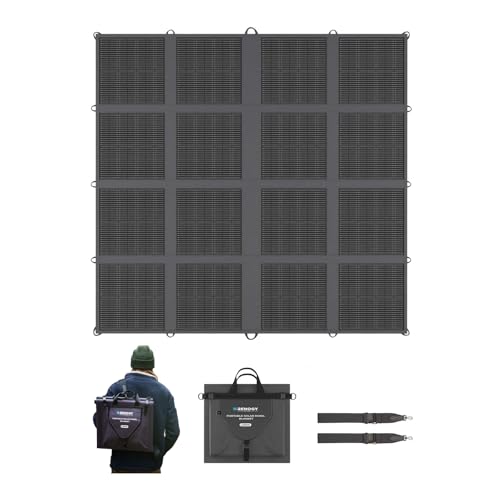
- 400W output with 25% efficiency
- 16-fold design stores compactly
- Multiple placement methods for campsites
Best For: RV and off-grid users with high-input power stations
High-Efficiency Fiberglass Pick
BougeRV 200W Portable Solar Panel

- N-Type cells rated up to 25% efficiency
- Fiberglass-reinforced foldable construction
- XT60/DC7909 connectors and 8.2-foot cable
Best For: Durable camping and RV setups needing flexible panel placement
High-Output Bifacial Pick
ZOUPW 480W Bifacial Portable Solar Panel

- 480W N-Type 16BB panel with up to 25% efficiency
- Bifacial design claims up to 30% extra gain
- Includes 13-foot cable, bag, and ground stakes
Best For: Large power stations, RVs, and high-demand off-grid charging
Lightweight Setup Pick
HQST 200W Portable Solar Panel

- 11-pound foldable design for easier carrying
- N-Type 16BB cells rated up to 25% efficiency
- Three-in-one cable and adjustable kickstands
Best For: Mobile campers wanting quick setup and broad power-station compatibility
Best Compact Pick
Ecosonique 200W Foldable Solar Panel
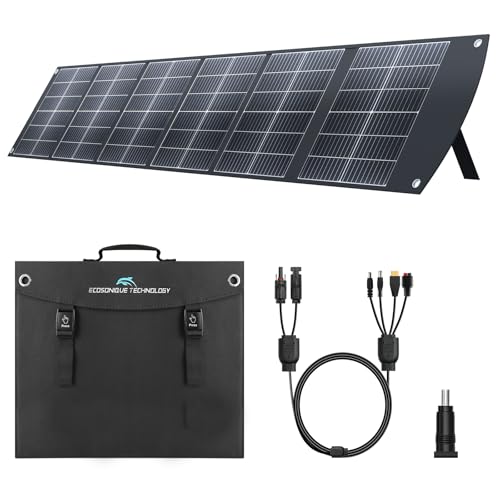
- Six-fold design weighs 11 pounds
- Up to 23.5% conversion efficiency
- Multiple power-station and USB outputs
Best For: Campers needing a compact, versatile 200W charging panel
Best High-Output Option

- 400W maximum power rating
- Up to 23.4% conversion efficiency
- Foldable design with adjustable kickstands
Best For: RV and off-grid users seeking higher rated solar output
Best Durable 200W Pick

- Up to 23.5% conversion efficiency
- 840D Oxford cloth and PET lamination
- Four-in-one MC4 adapter cable included
Best For: Campers wanting a rugged, broadly compatible 200W panel
Best All-Around Connectivity – ZOUPW 100W Foldable Solar Panel
For campers who want flexible compatibility without carrying extra adapters, this 100W option is a practical pick among portable solar panels for camping. Its 23.5% efficiency, foldable design, built-in device-charging ports, and included five-connector cable make it easy to integrate with many power stations.
Best For: Campers, RVers, and emergency-preparedness users who need broad power-station compatibility and direct USB charging.
Pros:
- 23.5% efficient monocrystalline cells with adjustable kickstands for improved sun positioning.
- Includes DC8020, XT60, Anderson, DC7909/8mm, and DC5521 connectors.
- IP67 waterproof panel with ETFE coating and a zippered cable pocket.
- USB-C PD and two USB-A ports can charge smaller devices directly.
Cons:
- At about 9.5 pounds, it is heavier than some 100W alternatives.
- Actual charging may be limited by the connected power station’s maximum input.
The ZOUPW stands out as a versatile, ready-to-use camping setup. Choose it when connector flexibility and weather resistance matter more than minimizing packed weight.
Best High-Power Folding Panel – Renogy 200W Portable Solar Panel
This Renogy panel is designed for campers who need more output without moving to a much larger setup. With 200W of rated power, 25% efficiency, multiple positioning angles, and direct USB charging, it is a strong choice for portable solar panels for camping and RV use.
Best For: Campers and RV travelers who want higher charging capacity in a foldable, moderately portable format.
Pros:
- 200W output and 25% efficiency from 16BB N-Type cells.
- Four kickstands support 40°, 50°, and 60° positioning options.
- USB-C PD 45W and two USB-A ports charge devices directly.
- UL 61730 certified, with a two-year material and workmanship warranty.
Cons:
- Weighs 13.9 pounds, so it is less convenient for carrying long distances.
- MC4 output only; the four-in-one adapter is sold separately.
The 200W Renogy is a sensible middle ground for campsite and RV charging. It offers substantially more rated power than a 100W panel, but buyers should budget for a separate adapter if their power station requires a different input.
Best Lightweight Option – FlexSolar 100W Foldable Solar Panel
When packed weight is the main concern, the FlexSolar is an appealing entry in portable solar panels for camping. This 100W panel weighs about 4.1 pounds, folds into a compact package, and combines power-station connectivity with USB-C, USB-A, and DC outputs.
Best For: Hikers, campers, and road-trippers who prioritize low weight and compact storage.
Pros:
- Exceptionally light at approximately 4.1 pounds for a 100W panel.
- Folds to about 12.99 by 10.43 by 2.17 inches and includes a carry bag.
- Provides USB-C PD 45W, USB-A, and 100W DC outputs.
- IP67 waterproof and dustproof design with monocrystalline cells.
Cons:
- The supplied notes do not specify a warranty or detailed positioning hardware.
- Its 100W rating provides less capacity than the larger Renogy panels.
The FlexSolar is the easiest option here to carry and store. It makes the most sense for mobile campers who need to recharge phones, power banks, or a compatible power station without hauling a heavier folding panel.
Best for High-Demand Power Stations – Renogy 400W Solar Blanket
For extended camps, RV trips, or larger power stations, this 400W Renogy blanket offers the highest rated output in the lineup. Its 16-fold format, 25% efficiency, and flexible placement options make it a useful choice among portable solar panels for camping when charging capacity matters most.
Best For: RV owners, van travelers, and off-grid campers with power stations capable of accepting higher solar input.
Pros:
- 400W rated output with 25% efficiency from 16BB N-Type cells.
- Folds to 16.54 by 15.83 by 4.13 inches and weighs about 16.1 pounds.
- Can be placed on a windshield or ground, or hung from trees and racks.
- Includes two shoulder straps and a two-year material and workmanship warranty.
Cons:
- Weighs more than the other listed options.
- MC4 adapter is sold separately.
- Real-world output depends on sun angle, shade, temperature, cable length, and input limits.
The 400W blanket is best suited to users who can take advantage of its high input potential. It is less about quick backpack portability and more about maximizing solar collection for a capable RV or off-grid power station.
High-Efficiency Fiberglass Pick – BougeRV 200W Portable Solar Panel
For campers who want dependable output without carrying a bulky glass panel, the BougeRV 200W is a practical choice among portable solar panels for camping. Its N-Type cells, fiberglass reinforcement, foldable design, and included extension cable suit regular camp and RV use.
Best For: Camping, RV travel, and off-grid users who need a durable 200W panel with flexible placement.
Pros:
- Up to 25% conversion efficiency from N-Type solar cells.
- Fiberglass reinforcement helps resist cracking and abrasion.
- Includes XT60 and DC7909 connectors plus an 8.2-foot extension cable.
- Folds with built-in handles and offers IP65 water and dust resistance.
Cons:
- At 13.8 pounds, it is heavier than the lighter 200W option in this roundup.
- Compatibility depends on the power station accepting the listed connectors and electrical specifications.
The BougeRV balances portability, outdoor protection, and connection flexibility. It is a sensible middle-ground option for campers who prioritize rugged construction and straightforward setup over minimum weight.
High-Output Bifacial Pick – ZOUPW 480W Bifacial Portable Solar Panel
The ZOUPW 480W is aimed at campers and RV users building a higher-capacity solar setup. As one of the most powerful portable solar panels for camping in this roundup, it combines N-Type 16BB cells, bifacial collection, a foldable composite design, and high-voltage compatibility for larger power stations.
Best For: Off-grid travel, RV use, and backup systems built around large compatible power stations.
Pros:
- 480W output with N-Type 16BB cells and up to 25% conversion efficiency.
- Bifacial design can provide up to 30% extra gain on reflective surfaces such as snow or sand.
- Includes a 13-foot extension cable, connector cable, storage bag, and ground stakes.
- IP68-rated composite construction and a stated 36-month warranty.
Cons:
- At 22.5 pounds, it is substantially heavier than the 200W panels.
- Its 42.5V architecture requires a compatible large power station.
- The manufacturer advises against long-term fixed, series, or parallel connections.
This panel makes the most sense when charging capacity matters more than compact carry weight. Its bifacial format may be particularly useful on bright, reflective ground, while the higher voltage and output call for careful power-station matching.
Lightweight Setup Pick – HQST 200W Portable Solar Panel
For campers who value easy carrying and quick positioning, the HQST 200W offers a streamlined option among portable solar panels for camping. It pairs N-Type 16BB cells with a lightweight foldable body, adjustable kickstands, and a three-in-one adapter cable for broad power-station compatibility.
Best For: Campers and RV travelers who want a lighter 200W panel that sets up quickly with common power stations.
Pros:
- Up to 25% efficiency from 16BB N-Type cells.
- Weighs about 11 pounds and folds to 1.97 inches thick.
- 4.9-foot adapter cable supports XT60, DC7909, and DC5521 connections.
- Adjustable 40°–60° kickstands and IP67 waterproof construction.
Cons:
- The included cable is shorter than the extension cable supplied with the BougeRV panel.
- Series or parallel connections require compatible solar generators and adherence to voltage and power limits.
- The warranty is limited to 12 months.
The HQST is a strong fit when portability and setup speed are central concerns. Its lighter weight and adjustable stands make it convenient for frequent moves, while the adapter cable broadens compatibility with popular power stations.
Best Compact Pick – Ecosonique 200W Foldable Solar Panel
For campers who prioritize packability, the Ecosonique 200W is one of the more compact portable solar panels for camping. Its six-fold design weighs 11 pounds, includes adjustable kickstands, and offers several connectors for charging compatible power stations and smaller devices.
Best For: Campers, hikers, RV travelers, and emergency users who want a lightweight 200W panel with broad connector support.
Pros:
- Six-fold design packs down to about 18 × 16.3 inches and weighs 11 pounds.
- Up to 23.5% conversion efficiency with four adjustable kickstands.
- Includes MC4, XT60, Anderson, DC7909, and DC5525 cables, plus USB-C PD3.0 and USB-A QC3.0 outputs.
- Weather-resistant Oxford cloth construction and a 12-month warranty.
Cons:
- Its 20V output may not match every power station’s input requirements.
- The listed 200W output depends on suitable sunlight and operating conditions.
The Ecosonique stands out when storage space and connector flexibility matter most. Verify your power station’s input specifications before buying, but its compact folded size and included adapters make it a practical camping-oriented kit.
Best High-Output Option – 400W Foldable Solar Panel
This 400W foldable panel is designed for campers and RV users who want a higher-capacity charging option. It uses monocrystalline cells with up to 23.4% conversion efficiency, adjustable kickstands, and MC4 connectivity for compatible portable power stations.
Best For: Off-grid camping, RV trips, and emergency backup when a 400W-rated panel is more appropriate than a smaller 200W model.
Pros:
- 400W maximum power rating with up to 23.4% conversion efficiency.
- Foldable design with adjustable kickstands for outdoor setup.
- MC4 connectors support many portable power stations through compatible connections.
- ETFE-laminated, dust-resistant, high-temperature-resistant construction is designed for outdoor use.
Cons:
- The supplied specifications list the output at 40V DC, so input compatibility should be checked carefully.
- Only the solar panel is listed as an included component, so additional cables or adapters may be needed.
This model is the strongest choice in the group for buyers focused on rated wattage. Its 40V output and included-component details make compatibility checks especially important before pairing it with a power station.
Best Durable 200W Pick – EBL Foldable Solar Panel
The EBL 200W is a durable option among portable solar panels for camping, with upgraded PET lamination and an 840D Oxford cloth exterior. It folds for transport, includes a four-in-one MC4 cable, and is designed to work with several common outdoor power-station brands.
Best For: Campers and RV users who want a rugged 200W panel with broad generator compatibility and a familiar MC4-based connection.
Pros:
- Monocrystalline cells provide conversion efficiency of up to 23.5%.
- Upgraded PET lamination and 840D Oxford cloth support water resistance, durability, and wear resistance.
- Includes an MC4-to-four-in-one cable with XT60, Anderson, DC7909, and aviation connectors.
- FCC, RoHS, and EMC certified, with short-circuit and surge protection.
Cons:
- At about 18 pounds, it is heavier than the Ecosonique 200W option.
- Its folded dimensions of 25.31 × 20.87 × 2.17 inches require more storage space.
- The listed maximum voltage is 35V DC, so confirm your power station’s input range.
The EBL favors rugged construction and connection flexibility over minimum packed size. It is a sensible fit for buyers who can accommodate its larger folded footprint and want a protected 200W panel with a one-year warranty.
How We Picked the Best Portable Solar Panels for Camping
We focused on panels designed for portable power stations and outdoor use, prioritizing useful wattage, stated conversion efficiency, foldable construction, weather resistance, and connection flexibility. The selection includes compact 100W panels for lighter loads, versatile 200W models for general camping, and larger 400W and 480W systems for faster recharging.
Because real-world solar output changes with cloud cover, shade, temperature, panel angle, and battery limits, advertised wattage should be treated as a maximum rather than a constant result. We also considered whether each panel’s connectors and voltage are likely to match common power stations.
Quick Comparison
| Panel class | Best suited to | Main advantage | Potential trade-off |
|---|---|---|---|
| 100W | Short trips and small power stations | More compact and easier to carry | Slower charging |
| 200W | Most campers | Strong balance of output and portability | Heavier and bulkier than 100W models |
| 400W–480W | Extended off-grid stays | Higher potential charging speed | More setup space, weight, and cost |
Key Buying Factors for Portable Solar Panels for Camping
Power and Efficiency
Choose wattage based on your battery capacity and daily consumption. A 100W panel can suit phones, lights, and compact power stations, while 200W is a practical middle ground. Larger panels make more sense when you run refrigerators, CPAP machines, cooking appliances, or multiple devices. Higher efficiency can provide more power from a smaller surface area, but it does not eliminate losses from shade or poor positioning.
Compatibility and Connectors
Check your power station’s maximum solar input voltage, current, and wattage before buying. MC4, DC, XT60, and Anderson connections are common, but included cables and adapters vary. A panel rated above your station’s input limit will not necessarily charge it faster.
Portability and Setup
Foldable panels are easier to transport, but higher-output models may require more storage space and a sturdier setup. Look for built-in stands, carrying handles, manageable folded dimensions, and enough cable length to place the panel in direct sunlight while keeping the battery shaded.
Weather Resistance
IP65 and IP67 ratings can help protect against dust and water exposure, but they do not make every panel suitable for permanent outdoor installation. Follow the manufacturer’s guidance, avoid submerging the panel, and protect connectors when conditions turn wet.
Who Should Buy Which Portable Solar Panels for Camping?
Choose a 100W model if portability matters most or you use a small power station for phones, lights, cameras, and occasional charging.
Choose a 200W model for the best all-around camping balance. It offers more useful daily energy while remaining practical for car camping, overlanding, and weekend trips.
Choose a 400W or 480W model for extended stays, larger batteries, or higher daily energy needs. Confirm your power station can accept the panel’s output and plan for a larger footprint, heavier carry, and more deliberate sun positioning.